Lao Language: Love/ຮັກ and Heart/ໃຈ
- Legacies of War Admin

- Feb 5
- 2 min read
Can you truly love something without the possibility of also being completely undone by it?
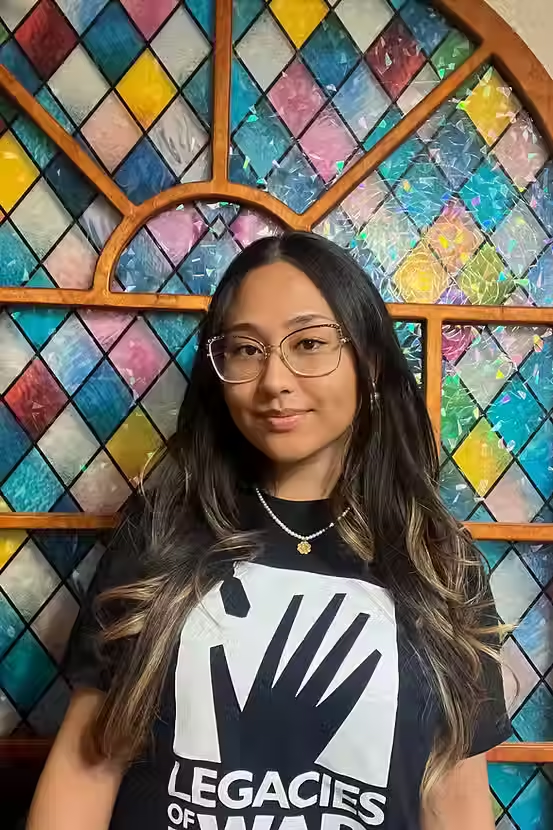
From the desk of Anna Douangphachanh, Legacies of War Board Member

Language is central to culture, but their relationship is complex. Both are dynamic, living systems that continuously shape one another. It’s been at the heart of my experience as a Lao American. I’m still discovering what it means to live between these worlds, navigating the rich space where languages and cultures meet. The words, phrases, and expressions of a language reveal how people understand relationships and emotions.
I’m not fluent in Lao, and my parents aren’t fluent in English, which has created a gap in how deeply we can connect through language. It’s a distance I’ve grieved again and again, yet perhaps that very gap also creates space to see one another more clearly. In trying to bridge it, I’ve studied Lao and learned through conversations with other Laotians and Lao Americans, discovering just how poetic and beautiful the language is.
In the spirit of Saint Valentine’s Day, here are a few of my reflections on some of the many ways huk/ຮັກ or love and jai/ໃຈ or heart are poetically woven into the Lao language.
Huk:love/ຮັກ and Huk/broken/ຫັກHuk:ຮັກ (love) is a breath away from huk:ຫັກ or broken. The difference is a single letter: ຮັກ versus ຫັກ, resulting in a tonal change. Perhaps love and brokenness are never far apart, sometimes separated by only the smallest shift. Can you truly love something without the possibility of also being completely undone by it?
Huk:love/ຮັກ In Lao, ຮັກ (love) is almost exclusively a verb, and not merely an emotion. It calls for effort and action to maintain, to protect, and to repair when things begin to rupture. Love is something lived and tended to, not only felt.
Jai:Heart/ใจ and EmotionsThe Lao language treats the heart as the center of emotional life, evidenced in how words signifying emotions include “heart”:ใจ like jai hai:angry/ใจหาย, jai dum: cruel/unkind/ใจดำ, jai yen:calm/ใจเย็น, and jai dee:kind/compassionate/ใจดี.
Khao jai:ເຂົ້າໃຈTo me, khao jai: ເຂົ້າໃຈ translates to “I understand it, in my heart.” It’s a way of showing someone that you truly see them, not just with your mind, but with your whole being. It’s an understanding that feels embodied, relational, and intimate, qualities I often contrast with the more cerebral values I associate with the “Western” way. Khao means “to enter,” so literally it is “to enter the heart”: to step inside another’s inner world, to feel alongside them, and to carry a part of that experience within yourself.
These aren’t merely abstract concepts; they shape how I live and work. It may sound cheesy, but my connection to Legacies comes from this same sense of love, of seeing, acknowledging, and caring. I also believe we can’t remain only within our legacies; we have to move with them, heal alongside them, and imagine lives beyond what was inherited. We are participants in what comes after. In the small ways I show up, I try to embody the values of huk (love/ຮັກ) and jai (heart/ໃຈ): tending to relationships, protecting what is fragile, and giving voice to stories while doing what we can to care for people in the present.