A Legacy of Survival, Memory, and Love

From the desk of: Melise Ke

My parents’ journey to the United States began long before they ever set foot on American soil. It began in Cambodia, during a time of war, fear, and unimaginable loss. Like many Cambodian refugees, my parents did not leave their homeland because they wanted to, but because staying meant risking their lives. They escaped a country torn apart by violence, famine, and trauma, carrying with them nothing but hope, resilience, and the quiet determination to survive.
As refugees, my parents arrived in the United States with limited resources, little understanding of the culture, and the heavy weight of everything they had left behind. They were survivors of war, genocide, and displacement; experiences that shaped not only their lives, but mine as well. Growing up, I learned that survival is not just about making it through something difficult; it is about continuing forward despite the pain, even when the past is never truly behind you.
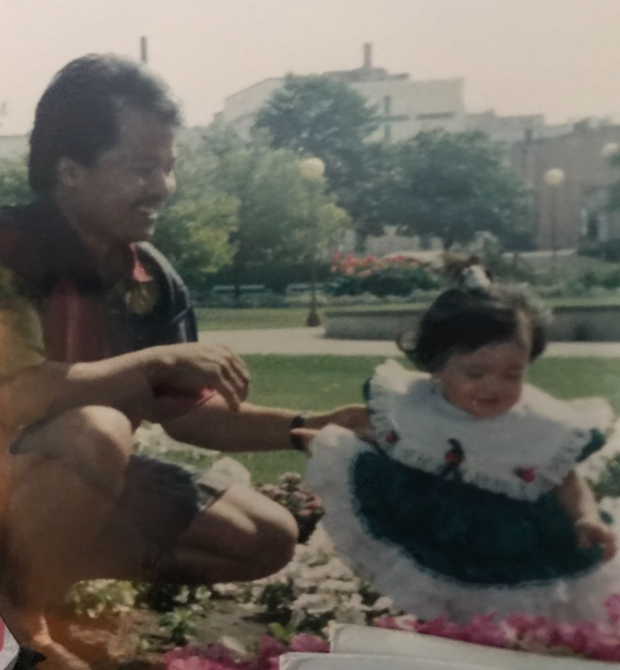
Every spring, as the weather warmed and the days grew longer, our home began to change. Weeks before Cambodian New Year, we cleaned with intention; scrubbing floors, wiping altars, airing out rooms as if the act itself could loosen what had been held all year. The smell of incense lingered in the air, mixing with steam from the kitchen, where food simmered for hours. There was always rice cooking, herbs being chopped, garlic and lemongrass sizzling in oil. These scents felt ancestral, familiar in a way I could not fully explain.
Cambodian New Year, Chaul Chnam Thmey, was always loud and alive. The clatter of dishes, the hum of Khmer music playing softly in the background, and elders laughing and speaking in a language that carried history in every syllable. At the temple, the heat wrapped around us as we removed our shoes, feeling the warmth of the concrete beneath our feet. I remember the sound of water being poured gently over Buddha statues, the quiet splash echoing in the open air, the way elders’ hands trembled slightly as water was poured over them in blessing. That water was never just water; it was cleansing, forgiveness and renewal.
As a child, I didn’t have the words for it, but I felt it deeply: this ritual was about washing away more than time. It was about honoring survival. It was about saying, we are still here.
Now, as an adult and a mother, those moments feel even heavier with meaning. April is no longer just a month on the calendar. It is a reminder that healing can exist alongside memory. It is also the season when we celebrate Lao New Year, Pi Mai Lao, honoring my children’s heritage from their father’s side.

Lao New Year carries a similar rhythm but its own texture. The water is perfumed with flowers, cool against the skin, laughter heard among you as blessings are exchanged. The scent of jasmine, the sound of water splashing, the brightness of traditional clothing: all of it signals joy, release, and hope. At the temple, sand is shaped into small stupas, grains slipping through fingers, each mound a quiet act of merit-making. Elders are honored, blessings spoken aloud, and for a moment, time slows.
Celebrating both Cambodian and Lao New Year in our home feels intentional and grounding. The rituals overlap: water, cleansing and reverence; but the stories are distinct. Together, they teach my children that renewal is not about erasing the past. It is about carrying it gently, with care.
This understanding is central to my dissertation work, which focuses on barriers to mental health services for Cambodian Americans. My research is not abstract; it is deeply personal. I have seen how trauma moves through generations, how silence becomes normalized, and how cultural stigma and systemic barriers keep healing out of reach. Finishing my dissertation has required me to sit with uncomfortable truths; to name wounds that were never given language and to advocate for care that honors culture, history, and dignity.

This is also why I support Legacies of War. War does not end when the bombs stop falling. It lingers in land still scarred by unexploded ordnance and in families who carry invisible wounds for decades. Legacies of War understands this long arc of harm and healing. Their work aligns with my belief that acknowledgment is necessary for restoration: whether physical, emotional, or generational.
Our traditions, from celebrating Khmer holidays to honoring our ancestors, ground me in who I am. The sound of Khmer music, the elegance of classical dance, the reverence shown during ceremonies; These are not just cultural practices, but expressions of survival and continuity. In a world that often pressures assimilation, holding onto these traditions is an act of resistance and pride.
It is incredibly important to me to pass down these traditions to my children. I want them to know where they come from; not just geographically, but emotionally and spiritually. I want them to understand the sacrifices their grandparents made, the history that shaped our family, and the beauty that exists alongside the pain. I want them to know the taste of the foods their grandparents grew up with and the languages that carry their ancestors’ stories. Teaching them Khmer traditions is my way of ensuring that our culture does not fade with time, that our stories continue to be told, and that our identity remains whole.
Equally important to me is honoring and including their Lao heritage from their father’s side. Lao culture carries its own richness, history, and traditions that deserve to be celebrated and preserved. Blending Cambodian and Lao traditions in our family is not about choosing one over the other, but about embracing the fullness of who my children are. I want them to grow up proud of all parts of their identity, understanding that their roots are deep and interconnected.

Every April, as we welcome the New Year, I am reminded that renewal does not mean forgetting. It means honoring what was lost while choosing to heal again and again. My parents’ journey as refugees shaped the person I am today. Their survival is the reason I am here, able to tell this story. Supporting organizations like Legacies of War, honoring Khmer culture, and embracing Lao traditions are all part of how I carry their legacy forward. It is my responsibility, and my privilege, to ensure that their struggles are not forgotten, their culture is celebrated, and their resilience lives on through future generations. In honoring the past, I find purpose in the present and hope for the future.


